The Marriage of Venetia Stanley and Edwin Montagu (1915)
A source-grounded account of the courtship, the conversion, the wedding, and the emotional wreckage left behind in Asquith's letters.
This page is built from the surviving correspondence between H.H. Asquith, Venetia Stanley, Edwin Montagu, and Sylvia Henley, together with Cynthia Asquith's diary. The key Montagu material comes from the Trinity College Cambridge archive, including Series MONT II, so the aim here is not gossip but chronology, quotation, and context.
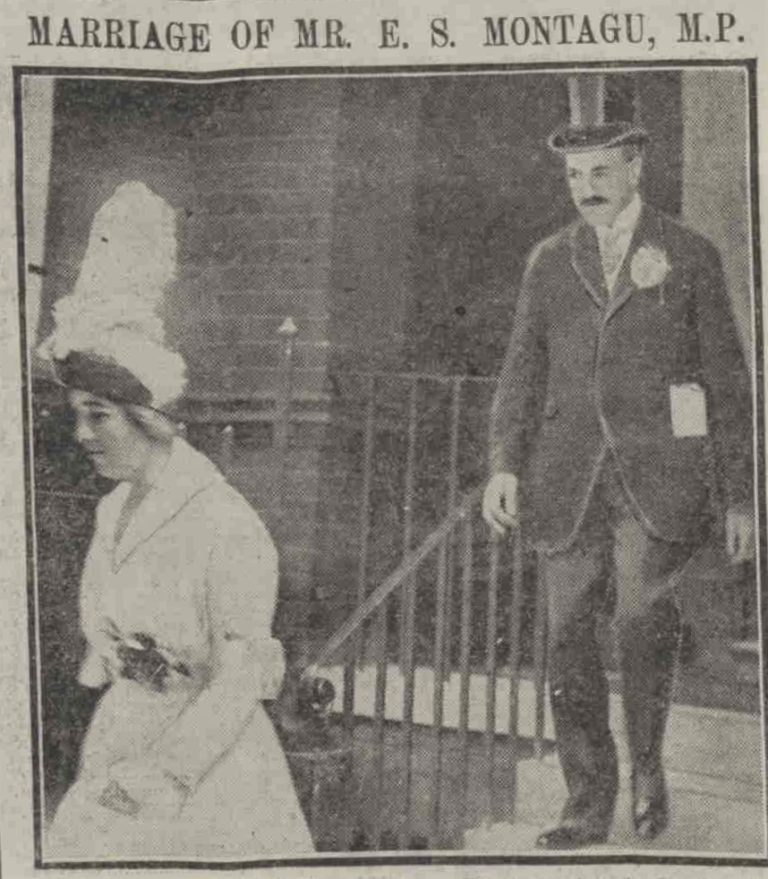
Wedding Date
26 July 1915
Ceremony
Jewish rites at Lord Swaythling's house
Conversion
Formal reception on 12 July 1915
Asquith
Did not attend the wedding
20 April 1915
Venetia admits that Asquith stands in the way.
Writing to Edwin Montagu, she says she feels 'very bitterly' that the Prime Minister should block the marriage, even while she still feels guilty toward him.
21 April 1915
Montagu presses for a decision.
Montagu tells Venetia that they 'must find' a way out and should not waste more time.
12 May 1915
Asquith learns the engagement is real.
He tells Venetia, 'this breaks my heart,' and describes the match to Sylvia Henley as a 'death-blow'.
6 June 1915
Venetia defines conversion as a label, not an inner change.
She tells Montagu she will comply, but insists she will never think of herself as Jewish in a spiritual or national sense.
12 July 1915
Venetia is formally received into the Jewish faith.
By this point the conversion is a legal and family necessity for the marriage settlement, not a devotional turning point.
24 July 1915
Asquith chooses not to say goodbye in person.
Two days before the wedding, he writes that it is better for both of them not to meet.
26 July 1915
Wedding day.
Venetia Stanley and Edwin Montagu marry with Jewish rites at Lord Swaythling's house. Asquith does not attend.
The Courtship and Asquith's Despair
The important point about spring 1915 is not simply that Edwin Montagu was proposing while Asquith was still writing love letters. It is that the two conversations overlap almost day by day. On 20 April, Venetia tells Montagu that she resents the Prime Minister for standing in the way. On 21 April, Montagu insists that they should not drift for another three years. By 12 May, the engagement is no longer hypothetical and Asquith is writing as a man who knows he has lost her.
That compressed timeline matters because it explains why the marriage felt so explosive to contemporaries. To Asquith, this was not a distant social match. It was the collapse of the private correspondence on which he had come to rely in the middle of war.
"I feel so ungrateful to him & yet at times I resent very bitterly that he should stand in the way."
"In spite of the fact that you've again & again told me that if I were to marry life would have nothing left to offer you, I am going to marry Edwin."
"As regards the Prime. I can't see the way out - but best beloved, we must find one ... for we ought not to waste time."
"If you are brave enough to come into the fold, right in."
"Most Loved - As you know well, this breaks my heart."
To Sylvia he calls the match a "death-blow" and says the two people most devoted to him have combined to deal it.
Contemporary Views on Edwin Montagu (and the "Teeth" Query)
Modern readers often land here looking for a simple answer to searches like "Edwin Montagu teeth." The surviving letters are revealing, but not in the tabloid way that query suggests. In the material used on this site, the more important evidence is the way Montagu's critics fused his looks, his nerves, and his Jewishness into a single language of contempt.
Asquith could be cruel in private. In August 1912 he jokingly called Montagu "the Assyrian" and asked Venetia whether the "sheen of his spear" had dazzled her vision. Once the engagement became real, that rhetoric hardened into something uglier. Writing on 12 May 1915, Asquith insists the problem is not only the "physical side," but then immediately slides into race-and-religion language that makes the bias obvious.
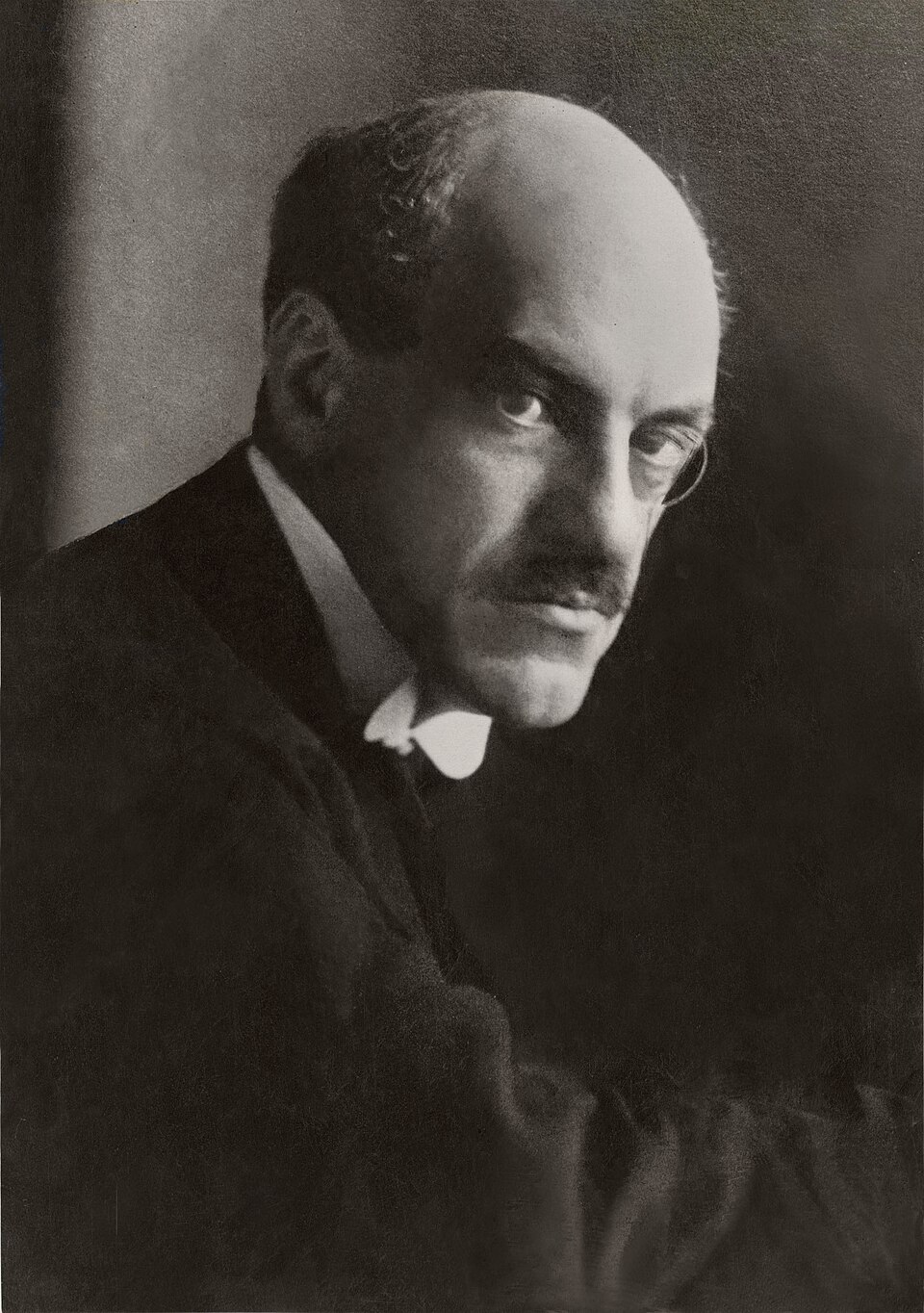
"I know ... that the Assyrian has been coming down among you like a wolf on the fold. Did the 'sheen of his spear' dazzle your vision?"
"It is not merely the prohibitive physical side (bad as that is) - I won't say anything about race & religion, tho' they are not quite negligible factors."
"But he is not a man: a bundle of moods & nerves & symptoms."
So the rigorous answer to the appearance question is this: yes, contemporaries mocked Montagu's looks, and some search traffic now reduces that to "teeth." But the archive's real value lies in showing how upper-class private speech could turn physiognomy into a vehicle for social snobbery and casual antisemitism.
Venetia's Conversion to Judaism
The conversion was a major threshold in the story, but not because Venetia discovered a new devotional life. Montagu's father's settlement effectively required a Jewish marriage. Montagu therefore argued for conversion in civic and family terms, not mystical ones. On 30 April he tells Venetia that becoming a Jewess should be like a woman becoming French by marrying a Frenchman.
Venetia's answer, written from Wimereux on 6 June, is one of the clearest letters in the whole archive. She says outright that she is doing it because he wants it and because, as she puts it with brutal candor, she thinks one is "happier rich than poor." She refuses to pretend that a formal change of label has altered her race, nationality, or spiritual identity.
"I want you to become a Jewess just as a woman who marries a Frenchman becomes a Frenchwoman."
"I never think of myself as one. It's a thought which does not intrude."
"Were I to be washed a 1000 times in the water of Jordan ... I should not feel I had changed my race or nationality."
"I'm going to be quite honest ... I think one is happier rich than poor."
Venetia jokes about "a little judicious cramming of old Josephs at the last minute" before her interview with Rabbi Morris Joseph.
Cynthia records the circle's tone as well, noting Asquith's coarse joke about whether Venetia had to "propose Judas Iscariot's health."
The social consequence was immediate. Asquith's 30 May letter to Sylvia Henley calls the move "repugnant & even repulsive," denounces Judaism as a "narrow sterile, tribal creed," and ends by saying that the thought of this fate for Venetia makes him sick. That is exactly why the conversion needs to be explained historically: not as a romantic flourish, but as a collision between money, marriage law, elite prejudice, and wartime emotion.
The Wedding Day (26 July 1915)
By late July the machinery of marriage was moving quickly. On 11 July Venetia tells Montagu that she has informed her father of the plan to marry on the 26th, urges him to get the license, and notes that her fortune has been put into settlement. Cynthia Asquith then records a wedding-dress fitting at Jays on 23 July, describing Venetia as "in excellent form and very happy."
The strongest surviving wedding-day detail in this project is about mood rather than guest list. Cynthia notes on 26 July that Bluetooth had been at the wedding lunch and said that everyone was "very calm." That calm sat beside obvious emotional damage. Two days earlier Asquith had written that it was better not to say goodbye in person because of the "full meaning" of her new departure.
The archive used here is better on atmosphere than on a complete seating chart, so it is safer to say what it clearly shows: the marriage took place on 26 July 1915 with Jewish rites at Lord Swaythling's house; Asquith did not attend; and the fallout radiated through the Asquith family for years afterward, even though he later sent silver boxes as a gift.
Venetia tells him she has "told her father of their intention to marry on the 26th" and urges Montagu to procure the license soon.
"I thought it was better for both of us not to say good-bye to-day."
He writes as the wedding approaches "within a measurable number of hours."
Bluetooth had been to Venetia's wedding lunch and said "all were very calm."
Related Reading
Venetia's Engagement
The project chapter on the spring and summer 1915 engagement crisis.
The Jewish Conversion
A chapter-length version of the inheritance issue, conversion, and backlash.
After the Breakup
What happened to Asquith, Venetia, and the Montagus after the wedding in 1915.
Who Was Edwin Montagu?
A wider historical guide to Montagu, his politics, and his portrayal in fiction.
Sources and Method
Quotations on this page come from the surviving letters of H.H. Asquith, Venetia Stanley, Edwin Montagu, and Sylvia Henley, plus July 1915 diary entries by Cynthia Asquith. The Montagu correspondence is drawn from the Trinity College Cambridge archive, including Series MONT II.
Where the surviving material gives a precise phrase, this page quotes it. Where the archive in hand is incomplete, especially on the exact guest list for the wedding, the page avoids pretending to know more than the record shows.