What Happened to Venetia Stanley? Her Later Life After 1915
The marriage years, the widowhood, the Beaverbrook affair, and the long afterlife of the Judith rumor.
Search interest around Venetia Stanley usually does not stop with the Asquith letters. Readers want to know what came next: whether the marriage worked, what widowhood changed, how she lived in the 1920s, and why her daughter Judith became the center of so much gossip. This page answers those questions directly, while staying honest about where the surviving record is rich and where it is thin.
Marriage
1915-1924
Judith Born
6 February 1923
Widowed
15 November 1924
Final Asquith Visit
November 1927
26 July 1915
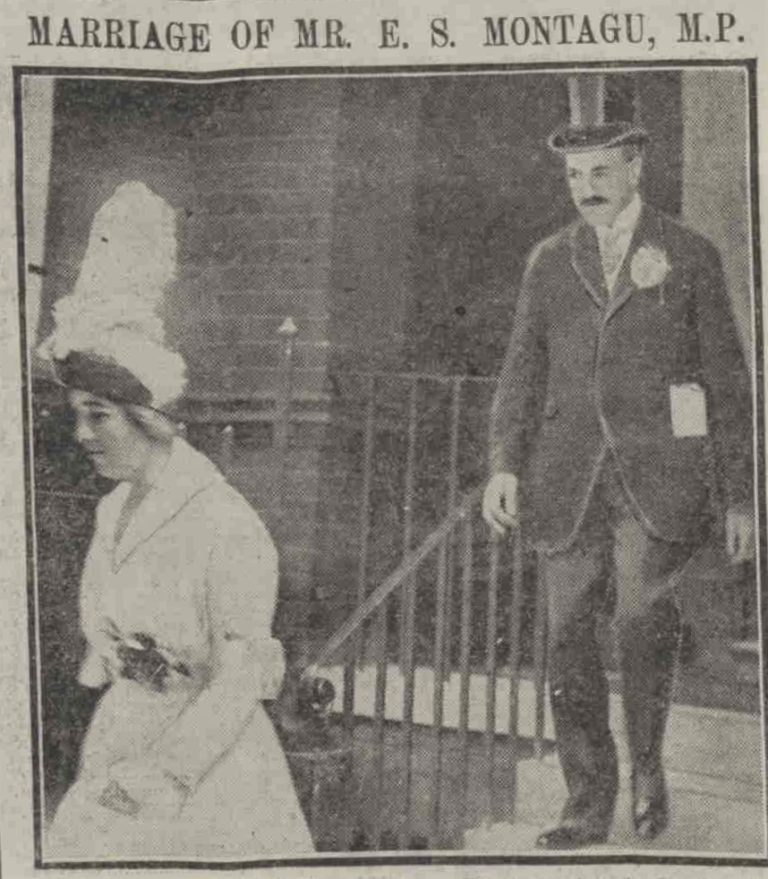
Venetia Stanley marries Edwin Montagu.
The Asquith-Venetia crisis ends in formal terms, but the emotional and political fallout keeps moving through the next decade.
1917-1919
Montagu reaches the height of his political career.
As Secretary of State for India, he becomes a major public figure even as the marriage itself grows more strained.
1919
Later biographical accounts place the Beaverbrook affair here.
By this point Venetia's married life and her wider social life are no longer easy to separate.
6 February 1923
Judith Montagu is born.
Her birth becomes one of the most discussed parts of Venetia's later life, especially in retrospect.
15 November 1924
Edwin Montagu dies.
Widowhood changes Venetia's position completely: socially, financially, and emotionally.
1 November 1927
Asquith writes after visiting Venetia at Breccles.
The surviving letter shows that some form of affectionate contact had been rebuilt by the end of both their stories.
3 August 1948
Venetia Stanley dies.
By then she had outlived Montagu, outlived Asquith, and become a figure remembered as much for later rumor as for wartime intimacy.
1. The Montagu Marriage Years (1915-1924)
The simplest mistake about Venetia after 1915 is to imagine that marriage closed the story. It did not. It merely changed the cast. Edwin Montagu went on to the high point of his public life, culminating in the India Office. Venetia, meanwhile, moved into a marriage that by most later accounts was companionable only in bursts and structurally unhappy.
The contrast matters. Publicly, the Montagus were a Cabinet couple. Privately, the marriage seems to have been marked by distance, by Edwin's persistent devotion, and by Venetia's desire for freedom, excitement, and other attachments. Existing project material is consistent on that point even when the surviving direct letters thin out after the war years.
So the answer to "what happened to Venetia Stanley?" begins here: she did not vanish into respectable obscurity. She became Venetia Montagu, but not in a way that erased the traits already visible in the 1910s: restlessness, appetite for society, and a refusal to be confined by other people's moral scripts.
2. Montagu's Death and Her Liberation
Edwin Montagu died in November 1924. That matters not only as a biographical date but as a social turning point. "Liberation" is the useful word here if it is used precisely: widowhood gave Venetia more freedom of movement, more autonomy in arranging her private life, and less obligation to perform a marriage that had long since ceased to look secure.
It also reopened older relationships in altered form. The great wartime epistolary obsession with Asquith was never revived as it had been in 1914-1915, but later contact did resume. By November 1927, Asquith could still write to her with an old warmth that shows how much of the emotional bond remained, even after everything else had changed.
"It was with a sad heart & heavy feet that I turned my back upon Breccles: I had enjoyed every minute of my little visit."
He adds that he is sending love to Judith, "whose acquaintance I should like to improve."
Why This Matters
That 1927 letter is not a lover's wartime panic. It is something later and quieter: a sign that Venetia, now a widow, was again inhabiting a social world in which Asquith could visit, remember, and take comfort.
3. The Beaverbrook Affair and Her Social Life
Later biographical accounts place a long affair with Lord Beaverbrook at the center of Venetia's postwar social life, usually beginning around 1919. This is one of those topics where the record used on this site is less direct than it is for the Asquith years. We are dealing more with synthesis and remembered pattern than with a single bombshell letter.
Still, the broad picture is consistent. Venetia did not become a dutiful political wife in retreat. She remained in the orbit of powerful men, lively houses, money, journalism, and clever talk. Beaverbrook fits that world perfectly: a press baron, a political operator, and the sort of man whose energy and resources matched the scale on which Venetia liked to live.
What makes this historically interesting is that her later social life was not mere decoration. It connected her to press power, Cabinet memory, and the postwar elite salon culture that replaced the pre-1914 coterie world. In other words, Venetia's afterlife was still political, even when it looked purely social from the outside.
4. Her Daughter Judith and the Earl of Dudley Question
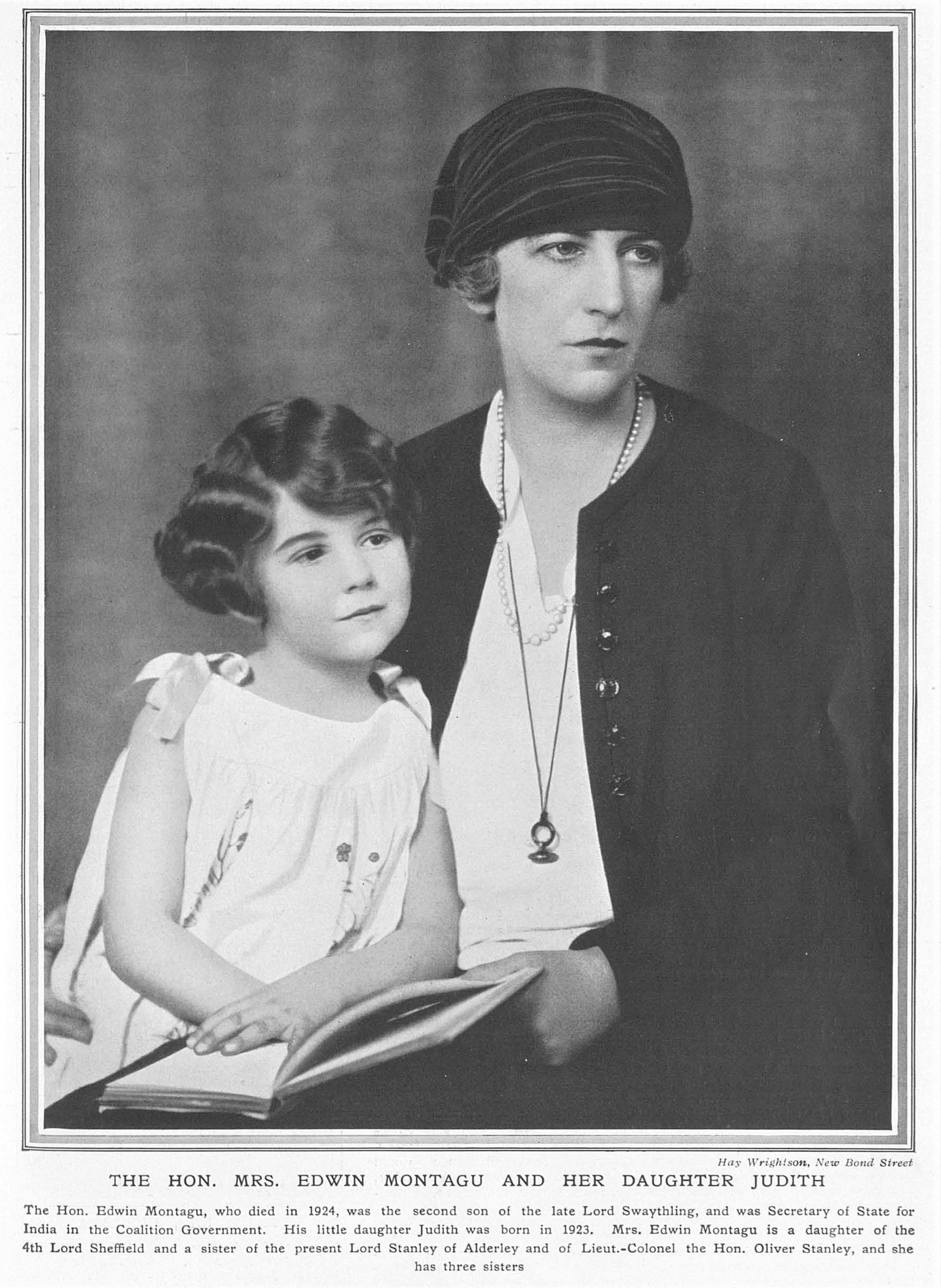
Judith Montagu, born on 6 February 1923, is central to the search history around Venetia because she carries the story into the next generation and because her paternity became a long-lived piece of society gossip. That gossip matters historically not because gossip is proof, but because it shows how Venetia was remembered: as a woman whose married life was assumed to be unconventional enough that even her daughter's paternity could be publicly doubted.
Existing material in this project is not perfectly tidy on the name attached to that rumor. Some notes reduce it to "Lord Eric Dudley," while other summaries point to the Dudley line more specifically, usually William Humble Eric Ward, then Viscount Ednam and later the 3rd Earl of Dudley. The careful conclusion is therefore limited: later rumor connected Judith to the Dudley circle rather than securely to Edwin Montagu, but the archive here records the gossip more clearly than it proves the fact.
That distinction is important. Search pages often flatten this into a neat answer. Historical rigor requires a messier one: Judith's paternity became part of Venetia's legend, but legend is not the same thing as contemporaneous demonstration.
The Safe Historical Answer
Judith was Venetia's daughter. Rumors long circulated that Edwin Montagu was not the father. Later retellings attach the story to the Dudley family. The surviving material used on this site does not justify a more categorical statement than that.
5. Robert Harris's Precipice - how accurate is the novel?
Many readers now reach Venetia Stanley through Robert Harris's popular novel Precipice, which has introduced her story to a much wider audience. That is useful, but it also creates a predictable problem: the novel is built on real people and real events, yet it remains historical fiction rather than a documentary reconstruction.
If you arrived here because of the book, the best next step is our dedicated guide separating what the novel gets right from what it reshapes, compresses, or invents for dramatic effect.
Related Reading
The Marriage of Venetia Stanley and Edwin Montagu
The 1915 wedding, conversion, courtship timeline, and Asquith's reaction.
After the Breakup
The project chapter on estrangement, reconciliation, and the Montagus after 1915.
Who Was Edwin Montagu?
Montagu's politics, marriage, decline, and death in one wider guide.
Asquith, Venetia, and State Secrets
Read more about the secret that PM Asquith shared with Venetia Stanley.
Sources and Method
This page combines the surviving Asquith-Venetia material used throughout the project with Cynthia Asquith's diary, the project's chapter summaries, and later biographical syntheses about the Montagu marriage and interwar years.
The evidentiary balance is uneven. The sections on marriage aftermath and Asquith's last visit rest on surviving correspondence and diary material. The Beaverbrook section and the Judith/Dudley question rely more heavily on later summaries and retrospective gossip. That difference is intentional and is reflected in how cautiously the page is written.