Who Was Edwin Montagu? The Real Man Behind Precipice
A source-grounded FAQ on the politician, the marriage, and the controversy around his historical legacy.
This guide follows the questions readers actually ask after finishing Precipice: who Edwin Montagu was, what he believed, and where the novel stays close to history versus where it dramatizes.
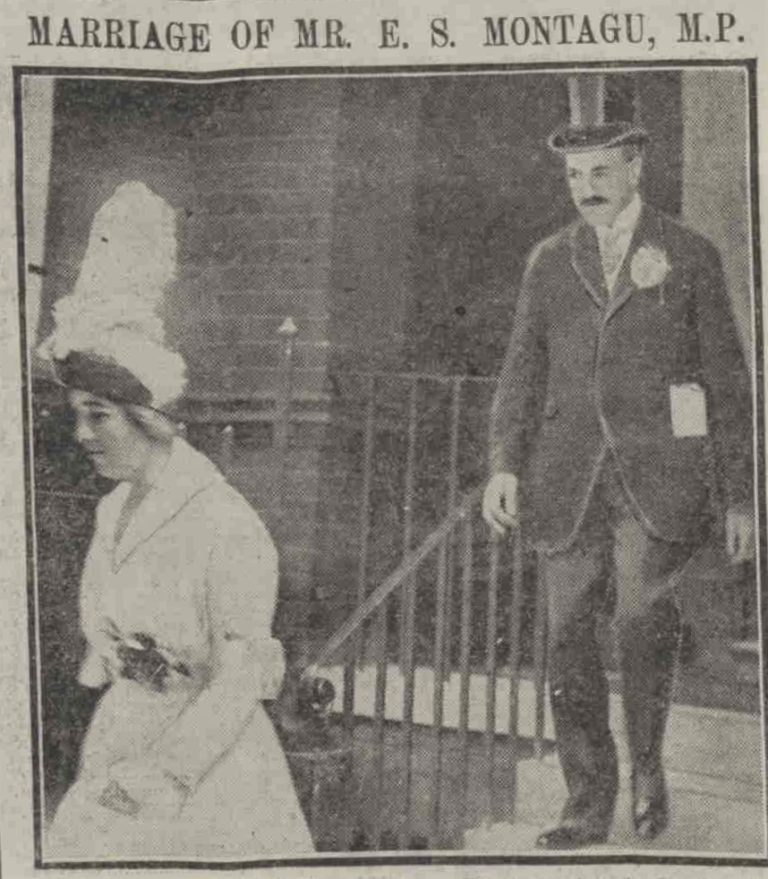
Was Edwin Montagu a real person?
The Short Answer: Yes.
Edwin Samuel Montagu (1879-1924) was a real British Liberal politician, MP, and Secretary of State for India. He was also the man Venetia Stanley married in 1915.
In the Asquith-Venetia story, Montagu is not a side fiction character. He was a major political actor in his own right and part of the highest circles of wartime government.
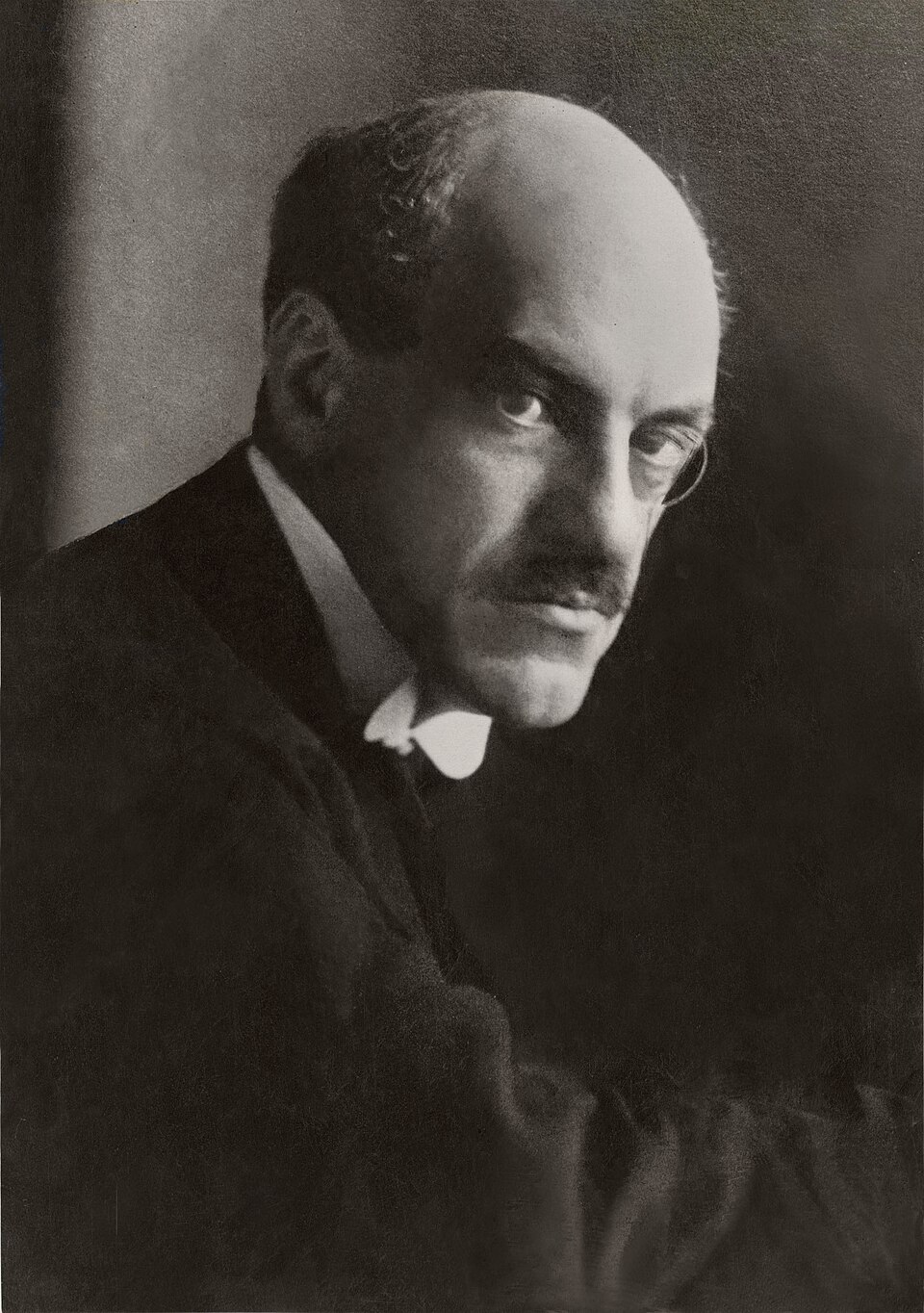
What did Edwin Montagu look like?
The Short Answer: Contemporary accounts often describe him as awkward and self-conscious.
Biographical portrayals repeatedly note his concern about his own appearance, including his teeth, alongside a sharp self-deprecating humor that appears in personal remarks and correspondence.
That insecurity mattered socially: in Edwardian elite culture, appearance and ease in drawing rooms were political assets, and Montagu was acutely aware of that disadvantage.
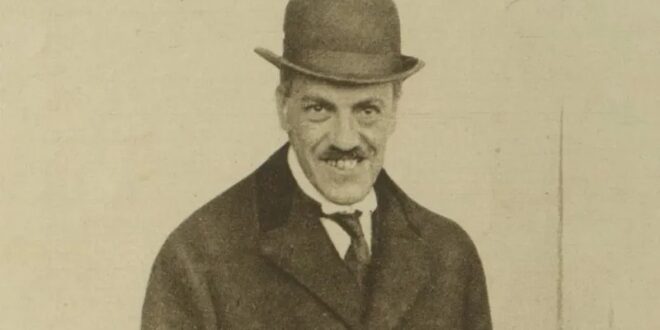
Did Edwin Montagu really love Venetia Stanley?
The Short Answer: Yes — painfully, persistently, and without much return.
Montagu’s love for Venetia Stanley was not a passing infatuation; the sources show years of devotion, longing, jealousy, and emotional dependence.
He pursued Venetia for years before she finally agreed to marry him in 1915, despite repeated rejections and her lack of physical attraction to him. Once married, the relationship remained deeply unequal: Venetia accepted the security, wealth, and freedom Montagu offered, but often stayed emotionally distant and later became openly involved with other men.
Yet Montagu’s letters continued to overflow with affection and anxiety about losing her. Whatever Venetia felt for him, Montagu’s love appears to have been real, intense, and painfully enduring.
Why did Venetia Stanley marry Edwin Montagu?
The Short Answer: She married him for security, freedom, and escape — not romantic love.
Venetia Stanley’s marriage to Edwin Montagu seems to have been a pragmatic decision: he offered wealth, status, devotion, and a way out of an increasingly burdensome relationship with H.H. Asquith.
By 1915, Venetia was twenty-eight, unmarried, and living through a war that had narrowed the pool of eligible men in her social world. Montagu, by contrast, was rich, politically ambitious, deeply in love with her, and willing to accept her on highly unusual terms. He could give her the lifestyle she enjoyed — travel, society, comfort, and influence — without demanding the kind of conventional marriage she dreaded
Just as importantly, marrying Montagu gave Venetia a decisive way to break free from Asquith’s emotional dependence on her. In that sense, the marriage was less a romantic surrender than a calculated bargain: Venetia gained wealth, position, and personal liberty, while Montagu gained the woman he had loved for years.
Read more about Venetia's Engagement to Edwin MontaguDid Edwin Montagu know about Asquith's letters?
The Short Answer: Yes — and the letters deeply alarmed him.
Montagu knew that Asquith was in love with Venetia, and by 1915 he had seen enough of the Prime Minister’s letters to understand how intense, consuming, and politically dangerous the attachment had become.
At first, Montagu seems not to have grasped the full nature of Asquith’s feelings, seeing him simply as an older friend who enjoyed Venetia’s company. But by late 1914 and early 1915, the situation was impossible to miss. Venetia showed Montagu some of Asquith’s letters, and what he read convinced him that the relationship had gone too far.
He was jealous, but also genuinely worried: Asquith was leading Britain during a world war, and Montagu feared that his obsession with Venetia might damage his focus and judgment. The letters therefore mattered twice over — personally, because they revealed the rival who dominated Venetia’s emotional life, and politically, because they exposed how vulnerable the Prime Minister had become.
Learn more about Asquith's Letters to VenetiaWhat happened to Edwin Montagu after Venetia married him?
The Short Answer: Montagu continued his political career but faced personal challenges.
After marrying Venetia in 1915, Edwin Montagu reached the height of his public career as Secretary of State for India, but the marriage itself brought him little peace: Venetia remained distant, spent lavishly, and pursued other men while Montagu stayed painfully devoted to her.
Politically, Montagu achieved something historically significant. He helped shape the 1917 declaration that Britain’s goal in India was the gradual development of self-governing institutions, then drove the Montagu-Chelmsford Reforms that became part of the Government of India Act of 1919.
But the same years were marked by humiliation and exhaustion. Venetia’s affair with Lord Beaverbrook became openly known, Montagu suffered severe political attacks over India and Turkey, and his health deteriorated. In 1922 he was forced to resign from the Cabinet, then lost his parliamentary seat. Two years later, in 1924, he died at only forty-five — politically ruined in Britain, but mourned in India as one of its most important British advocates.
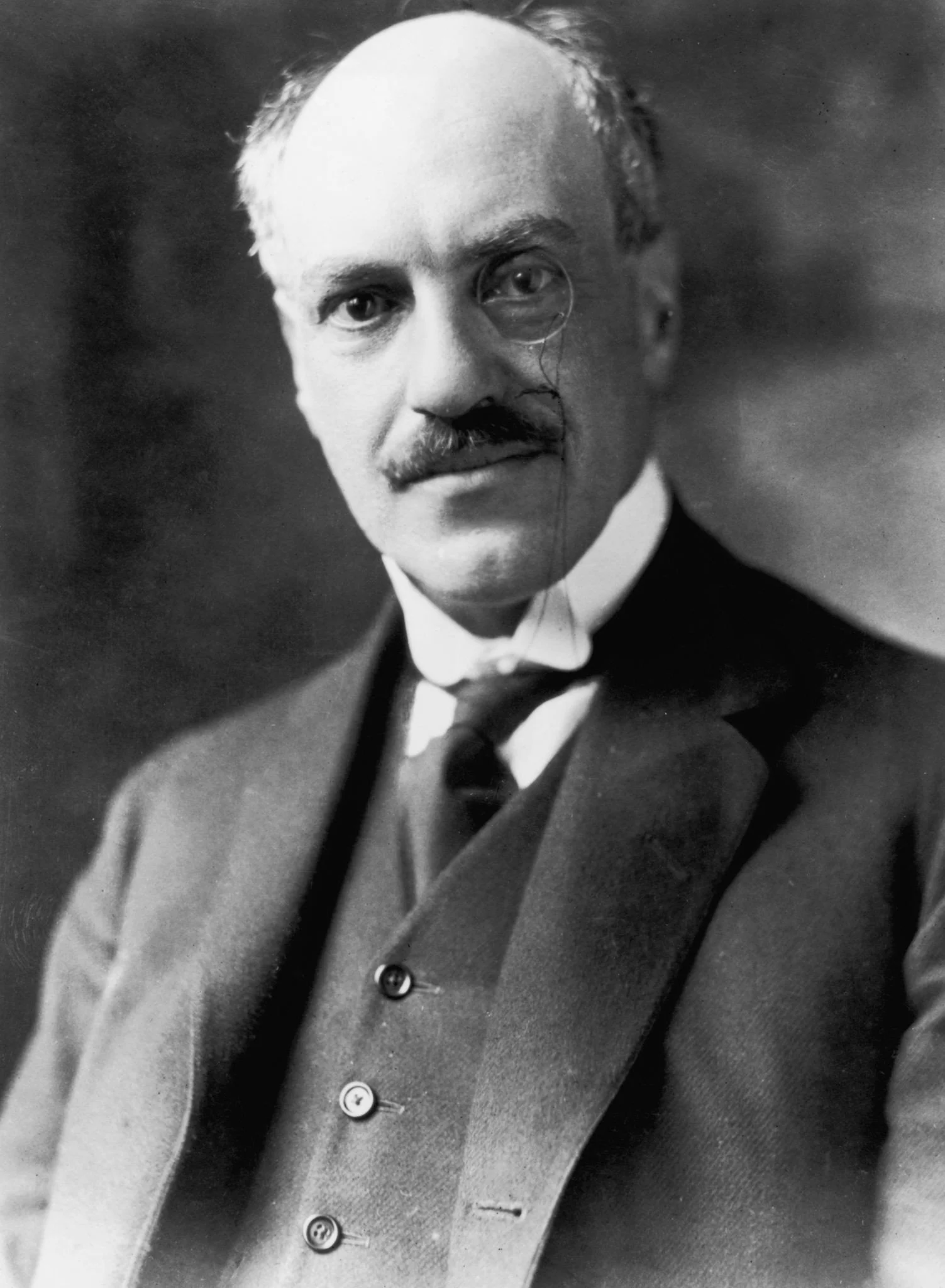
Privately, the marriage saw strain, and he died young in 1924, leaving Venetia a widow with their daughter Judith.
How did Edwin Montagu die?
The Short Answer: Edwin Montagu died of blood poisoning on November 15, 1924, at the age of 45.
His early death cut short what had already been a consequential political career and fixed his legacy within a turbulent wartime and postwar decade.
How accurate is Harris's portrayal of Edwin Montagu?
For a broader breakdown of the novel's historical accuracy, see Precipice: Fact vs. Fiction.
The Short Answer: Substantively grounded, but still a novelist's portrait.
Harris tracks the broad historical reality well: real people, real tensions, and real political stakes. But dialogue, interior motives, and private scenes are shaped to serve narrative drama.
The most reliable approach is to read the novel as historical fiction and pair it with primary-source letters and modern scholarship.
Want the Full Story Beyond Precipice?
Explore the archive, sources, and context behind the Asquith, Venetia, and Montagu triangle, including timelines and annotated records.
Read on Substack